10 Jul 2026
Cross-Cultural Comparisons of Strategy Development in Virtual Card Tournaments

Virtual card tournaments have expanded rapidly since the early 2020s, drawing participants from dozens of countries who compete on platforms that operate around the clock, and researchers have documented clear patterns in how strategy development varies by cultural background. Participants from North America, East Asia, Europe, and Australia bring distinct approaches shaped by local gaming histories, social norms, and training methods, while data collected through 2026 shows these differences persist even as platforms standardize rules and software interfaces.
Platform Growth and Participant Demographics
Leading virtual platforms hosted major series in July 2026 that attracted over 180,000 unique entrants across multiple time zones, and registration logs reveal that players identifying with East Asian cultural backgrounds comprised roughly 34 percent of the field, North American entrants accounted for 29 percent, European players made up 25 percent, and the remaining share came from Australia, Latin America, and other regions. Tournament software records indicate that average session lengths differ by group, with East Asian participants logging longer continuous hours per event compared with North American counterparts who tend toward shorter, more segmented play periods.
Strategic Patterns Across Regions
Studies conducted by the Australian Institute for Gambling Research have tracked decision-making metrics such as pre-flop raise frequencies and post-flop aggression factors, revealing that players from collectivist cultural contexts often favor tighter starting-hand ranges in early tournament stages while participants from individualist backgrounds display higher rates of speculative calls. European entrants, particularly those from Nordic countries, show elevated bluff frequencies in final-table scenarios according to aggregated hand histories released in mid-2026, whereas players from South Korea and Japan demonstrate stronger tendencies toward value betting with medium-strength holdings.
Observers note that these patterns emerge consistently across multiple platforms, and software telemetry from events held between January and July 2026 confirms that adaptation occurs over repeated exposures to international competition. North American players who compete regularly against Asian fields gradually reduce their continuation-bet percentages by an average of 8 percent within six months, while East Asian participants increase their three-bet ranges when facing European opponents.
Training Methods and Knowledge Transfer
Training ecosystems differ markedly by region, with North American players relying heavily on solver software and subscription-based coaching sites that emphasize mathematical ranges, whereas East Asian competitors frequently participate in group study sessions conducted through messaging apps and regional forums that stress psychological reads and opponent profiling. Australian players, according to figures released by the Australian Communications and Media Authority, combine both approaches at higher rates than any other group, incorporating solver outputs into community-driven discussion threads.
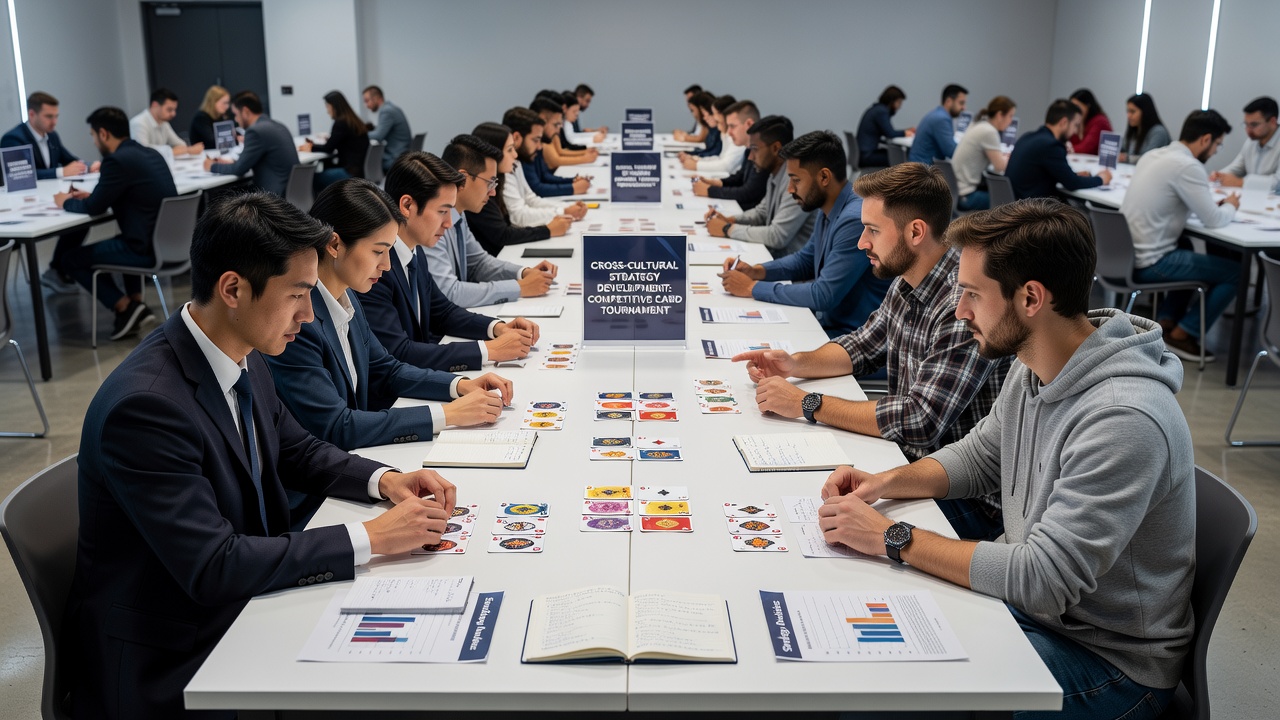
Researchers at the University of Nevada's International Gaming Institute have examined how these training differences translate into in-game adjustments, and their 2026 dataset shows that players exposed to multicultural fields develop hybrid strategies faster than those who compete primarily within single-region pools. One cohort of Canadian participants who joined weekly international study groups reduced their fold-to-three-bet percentages by 12 points over four months, illustrating measurable knowledge transfer across cultural lines.
Communication and Table Dynamics
Chat functions and table-talk norms also reflect cultural influences, with European players using more direct language in chat boxes during breaks while East Asian participants maintain higher rates of silence or emoji-only exchanges. Platform moderators report that these communication styles affect table atmosphere, and data from July 2026 events indicate that tables with mixed regional representation experience 15 percent fewer disputes over rule interpretations than homogeneous tables.
Those who have analyzed thousands of final-table replays note that cultural background correlates with risk tolerance under pressure, and players from regions with longer histories of land-based card rooms tend to maintain steadier bet-sizing patterns even when stacks become shallow. Conversely, participants whose experience derives primarily from virtual environments show greater variance in bet sizes during high-stakes moments.
Conclusion
Cross-cultural comparisons continue to yield actionable insights for both participants and platform operators, and ongoing data collection through the second half of 2026 will likely refine understanding of how strategy development evolves when players from varied backgrounds share the same virtual tables. The patterns documented so far demonstrate that cultural context shapes initial approaches yet remains flexible under sustained international exposure.