12 Jul 2026
How Time Zone Differences Shape Participation in Global Mobile Live Gaming Sessions
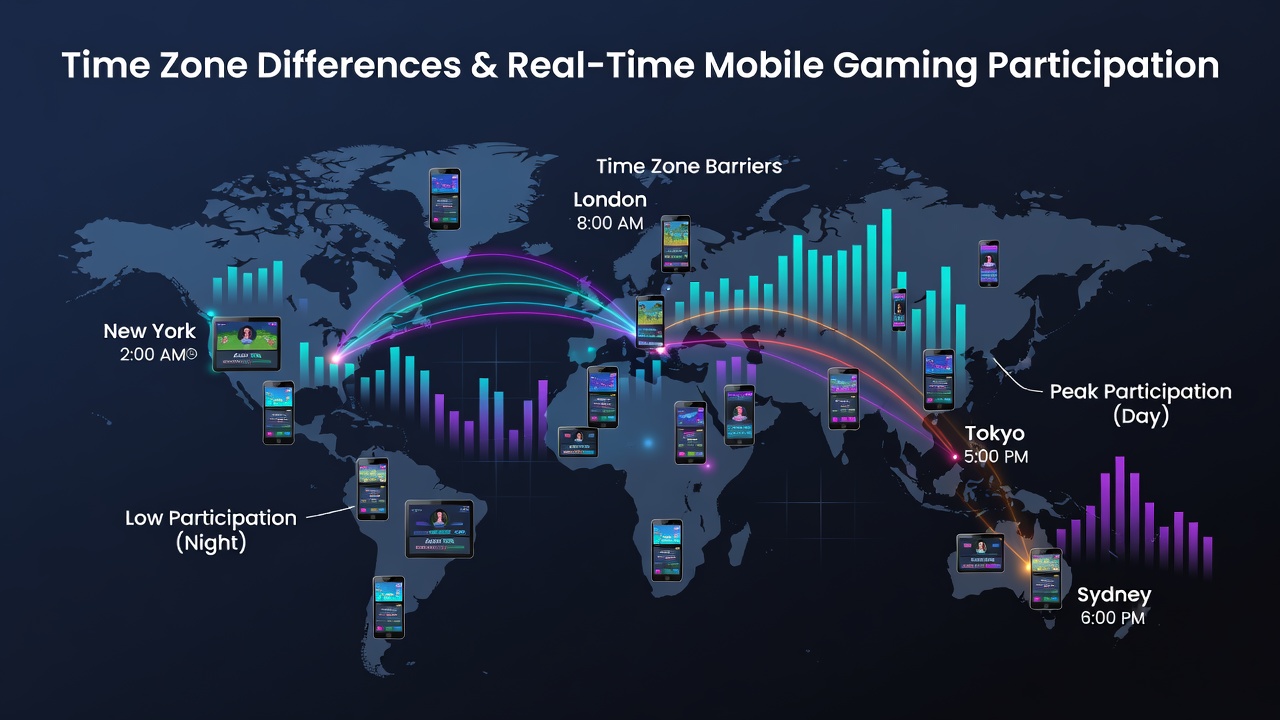
Time zone variations create distinct patterns in how mobile users join live gaming sessions around the world, and researchers have documented these effects through server log analysis and player behavior studies since the expansion of global multiplayer platforms. Mobile devices allow access from nearly any location, yet peak engagement windows shift dramatically depending on local clock times, which means developers must account for overlapping or conflicting schedules when scheduling tournaments, raids, and competitive events.
Global Player Distribution and Time Overlaps
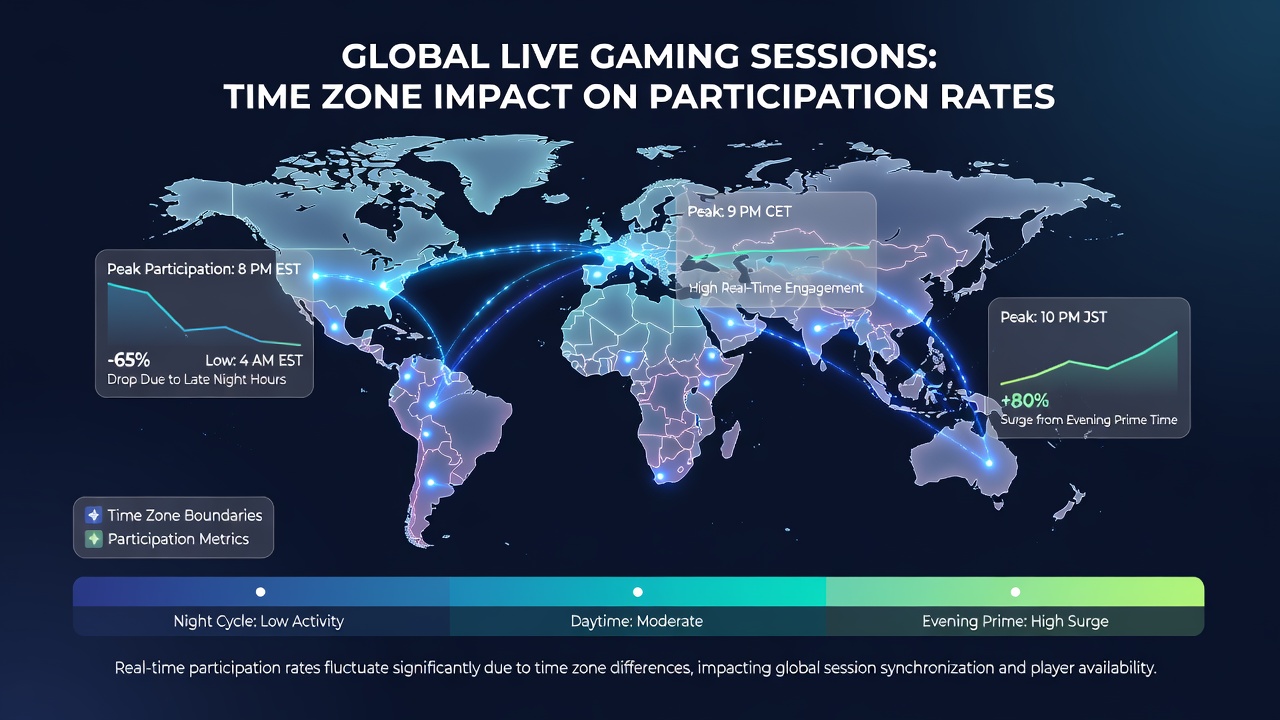
Data collected from major mobile gaming networks shows that sessions hosted during evening hours in one region often coincide with early morning or midday periods elsewhere, and this mismatch reduces attendance from distant zones even when interest remains high. For instance, a live event starting at 8 PM Eastern Time draws strong numbers from the Americas and Europe, whereas participants in East Asia and Australia face less convenient slots that cut into sleep or work routines. Analysts at regional industry groups note that these overlaps determine whether a session achieves broad international reach or stays concentrated among a few geographic clusters.
Studies of participation metrics reveal that regions separated by eight or more hours frequently exhibit attendance drops of 40 to 60 percent compared with zones within four hours of the host time. Mobile operators have responded by offering multiple daily start times, yet single-session formats still experience uneven turnout that reflects the underlying clock differences rather than content quality alone.
Regional Patterns Observed in July 2026
Figures from July 2026 indicate that North American and European players maintained higher average session lengths when events aligned with local evenings, while Asian markets showed stronger midday participation for shorter casual matches. Reports compiled by the Interactive Games and Entertainment Association highlight how Australian and New Zealand users adjusted their schedules around Pacific Rim events, resulting in concentrated spikes during specific two-hour windows that operators could predict with reasonable accuracy.
These patterns extend to emerging markets in South America and Africa, where mobile penetration continues to rise and where live sessions scheduled for European prime time sometimes capture unexpected audiences because local users treat the events as late-night social activities. Observers note that such adaptations demonstrate flexibility among players, although overall retention rates remain tied to how closely start times match personal availability.
Impact on Event Scheduling and Platform Design
Platform teams have introduced tools that automatically rotate start times across a weekly calendar, and these adjustments aim to balance access for users in distant zones without fragmenting the player base into isolated groups. Research from academic groups studying digital entertainment consumption finds that repeated exposure to inconvenient timings correlates with gradual declines in return visits, even when players express continued interest in the game itself. Consequently, many developers now publish global heat maps that display expected activity levels hour by hour, allowing both organizers and players to anticipate when real-time features will draw the largest crowds.
Push notification systems further influence outcomes because alerts sent according to the host time zone reach some users during active periods and others during rest hours, and delivery timing therefore affects whether recipients even notice an ongoing session. Companies that segment notifications by detected device location report measurable improvements in click-through rates compared with uniform global broadcasts.
Technical and Behavioral Factors at Play
Network latency compounds the challenges created by time differences, since users in regions with less optimal routing paths may experience delays that discourage sustained participation once they finally log in. Mobile carriers have expanded 5G coverage in many markets by mid-2026, yet coverage gaps persist in rural areas and continue to shape which time zones can reliably join high-intensity live events. Behavioral data also shows that players adapt by forming smaller regional communities that run parallel sessions, thereby reducing the pressure on any single global schedule while preserving social elements within more convenient local hours.
Payment and reward systems tied to real-time events introduce additional variables because redemption windows may close before users in distant zones finish their daily routines, and developers have begun extending claim periods to mitigate this effect. Industry reports indicate that such extensions help maintain engagement numbers without altering core event structures.
Conclusion
Time zone differences continue to exert measurable influence on participation rates in global mobile live gaming, and the patterns observed through server analytics and regional studies provide operators with concrete information for refining schedules and notification strategies. As mobile networks expand and player bases grow more geographically diverse, platforms that incorporate flexible timing options and location-aware features demonstrate sustained ability to attract users across multiple continents. The data collected through July 2026 and beyond will likely guide further refinements that address remaining gaps while preserving the real-time social aspects that define these sessions.