Regulatory Shifts Across Canadian Provinces Shape Skill Integration in Digital Gaming Platforms
Written by Erik Otto · Aug 23, 2026

Regulatory Shifts Across Canadian Provinces Shape Skill Integration in Digital Gaming Platforms
Canadian provinces have introduced targeted regulatory updates since early 2025, and these changes now guide how operators embed skill-based mechanics into platforms that traditionally relied on chance alone. Observers note that provinces such as Ontario, British Columbia, and Quebec each maintain separate licensing regimes, yet recent amendments create clearer pathways for hybrid game formats that combine random outcomes with player decisions.
Provincial Frameworks Evolve at Different Paces
Ontario's Alcohol and Gaming Commission revised its digital gaming standards in March 2026, and the new rules permit limited skill overlays in slot-style titles provided the core return-to-player calculation remains anchored in chance. Quebec followed with its own directive in June, which requires operators to submit detailed probability models whenever a game includes player-controlled elements such as card selection or timing challenges. British Columbia's Gaming Policy and Enforcement Branch released guidance in August 2026 that distinguishes between pure chance games and those incorporating measurable skill components, thereby setting disclosure thresholds for marketing materials.
Data from provincial compliance reports indicate that applications for hybrid titles rose 28 percent between January and July 2026 compared with the same period in 2025. Operators must now demonstrate that skill elements do not override the random number generator, and regulators conduct independent audits before approving each new release.
Technical Requirements Drive Platform Adjustments
Developers respond to these mandates by redesigning backend systems so that skill inputs influence bonus rounds rather than base game payouts. One engineering team in Toronto documented how they separated the random reel spin from a subsequent poker-style mini-game, ensuring the latter contributes no more than 12 percent to overall expected value. Similar architectures appear in titles licensed across multiple provinces, although each jurisdiction demands slightly different documentation of the separation.
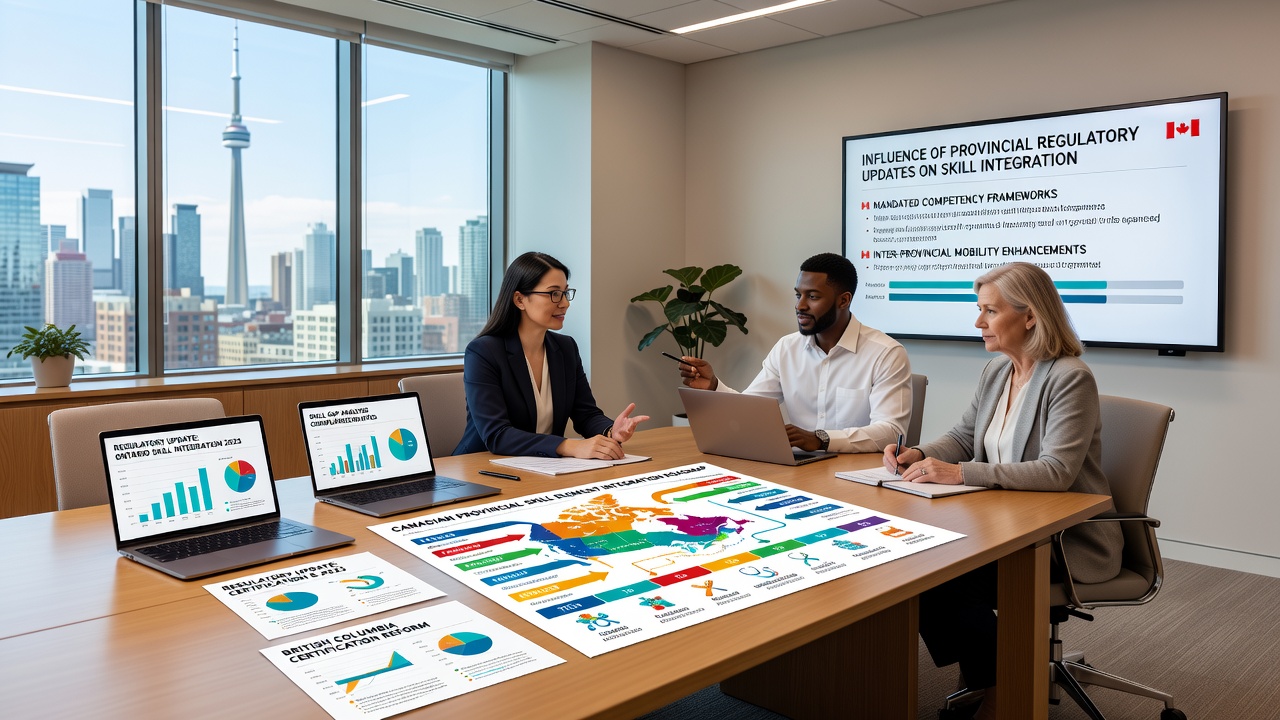
Testing protocols now include both mathematical verification and live player trials under controlled conditions. Researchers at several Canadian universities have begun publishing comparative analyses of player behavior in regulated versus unregulated environments, and preliminary figures show modest increases in session duration when skill features are present yet still bounded by regulatory caps.
Operator Strategies and Cross-Provincial Licensing
Companies holding licenses in more than one province coordinate submissions to meet overlapping but distinct standards. A single game build might carry different certification labels depending on the province where it is offered, and marketing claims about skill influence require province-specific disclaimers. Payment processors and affiliate networks have adapted their tracking systems to flag titles that incorporate approved skill modules, which simplifies reporting to regulators.
According to Alcohol and Gaming Commission of Ontario records, 17 hybrid titles received approval through August 2026, while British Columbia processed 9 comparable submissions in the same timeframe. These numbers reflect a deliberate pace rather than rapid expansion, as regulators continue to monitor data on responsible play metrics.
Player Verification and Transparency Measures
Updated rules also address how platforms communicate the presence of skill elements to users. Every approved title must display a standardized icon set indicating the degree of chance versus skill, and operators log user interactions with these disclosures. Compliance teams conduct periodic reviews of session data to confirm that players understand the hybrid nature of the games they access.
International comparisons occasionally surface in policy discussions, yet Canadian regulators focus on domestic evidence gathered through their own licensing portals. Statistics Canada gaming expenditure surveys provide supplementary context, showing steady growth in digital platform usage across provinces that have implemented the new hybrid guidelines.
Conclusion
Provincial regulatory updates continue to define the boundaries within which skill elements integrate into chance-based digital entertainment, and operators maintain ongoing dialogue with regulators to refine technical and disclosure standards. As August 2026 draws to a close, the landscape shows measured adoption rather than wholesale transformation, with each province preserving authority over its own licensing criteria while permitting limited innovation in game design.